TaylorMade’s SYSTM2 is a five-model, soft-steel putter line built around one idea: a complete system for every putting stroke. Two new mid-mallet shapes. Three blade widths. Two hosel options per model. One consistent construction standard across all of them — 304 stainless steel, a precision-milled face, and a two-tone finish that does real alignment work at address. If you’ve been playing a putter that doesn’t match your stroke, the SYSTM2 lineup is where that changes.
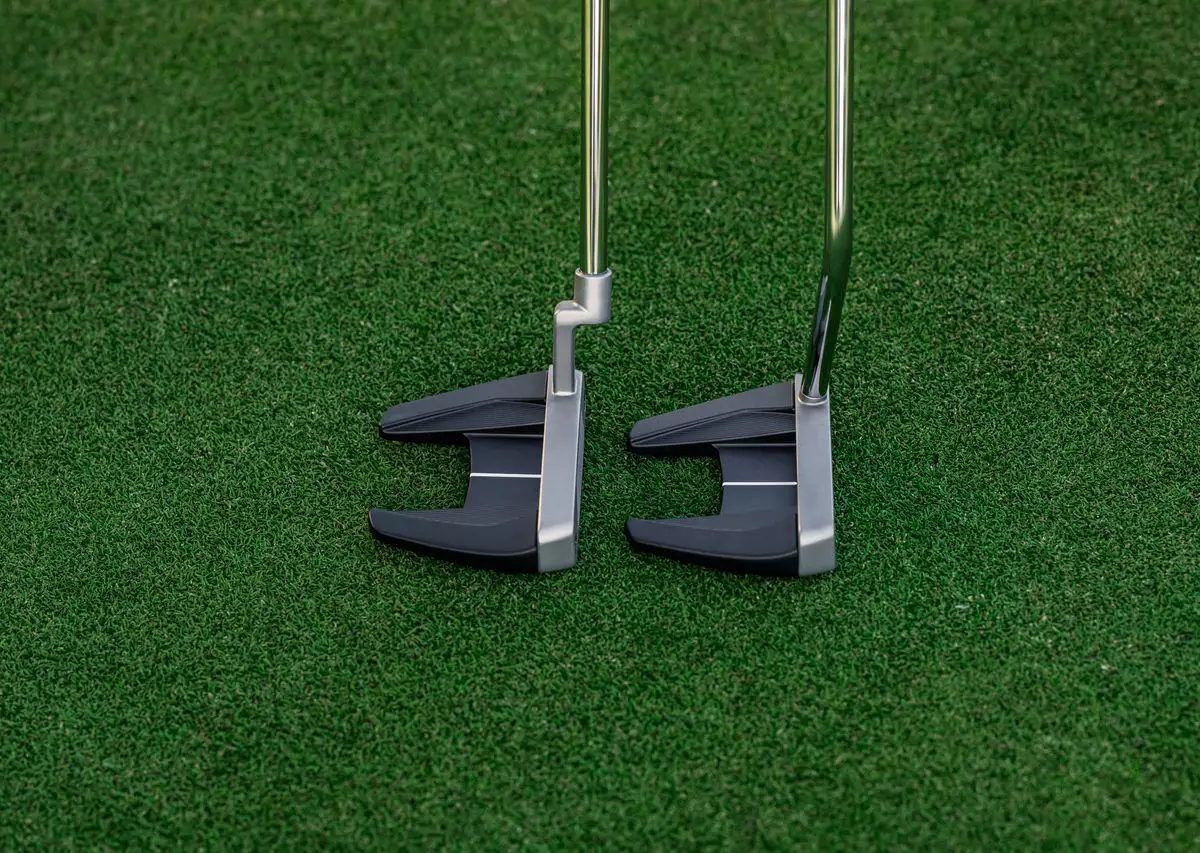
The TaylorMade SYSTM2 lineup – two mallet models side by side on the putting green.
What the SYSTM2 Line Is — and How It’s Built
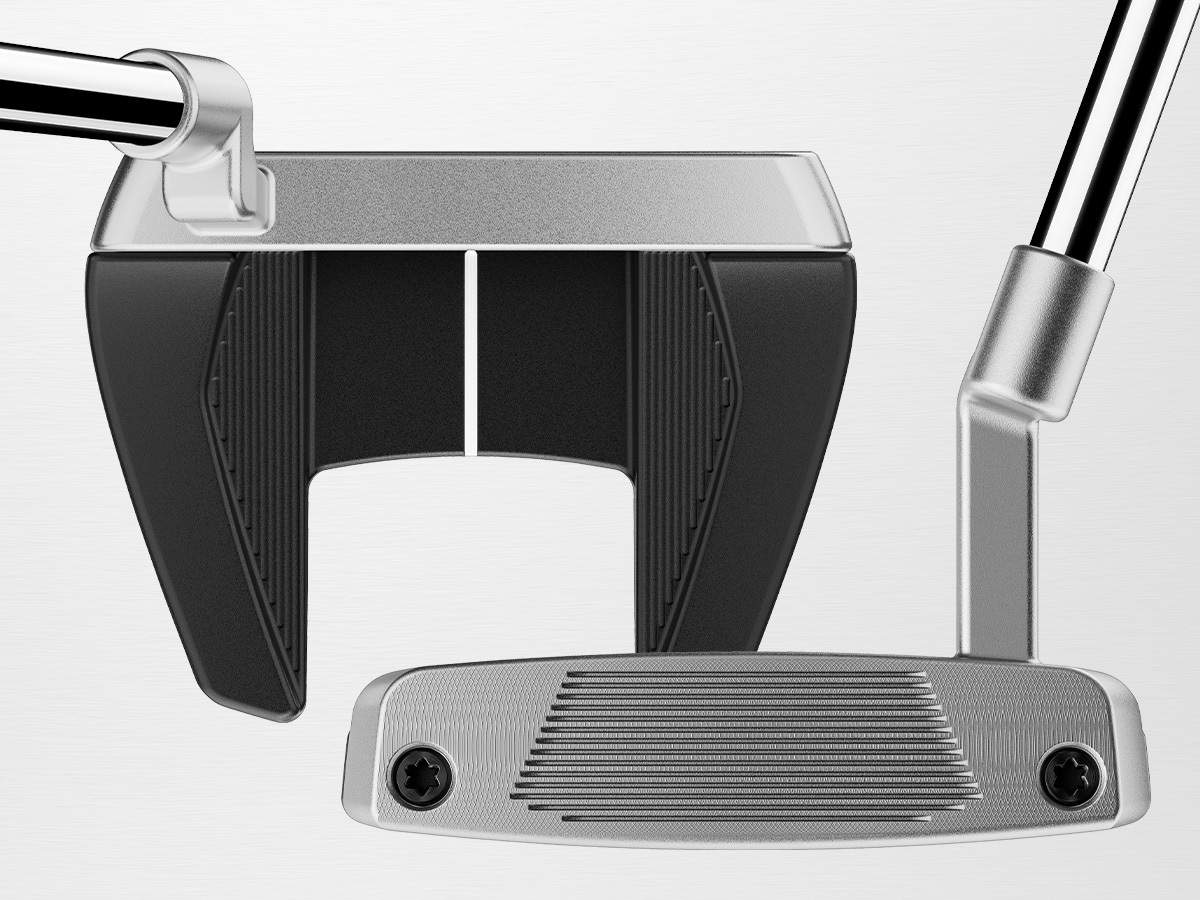
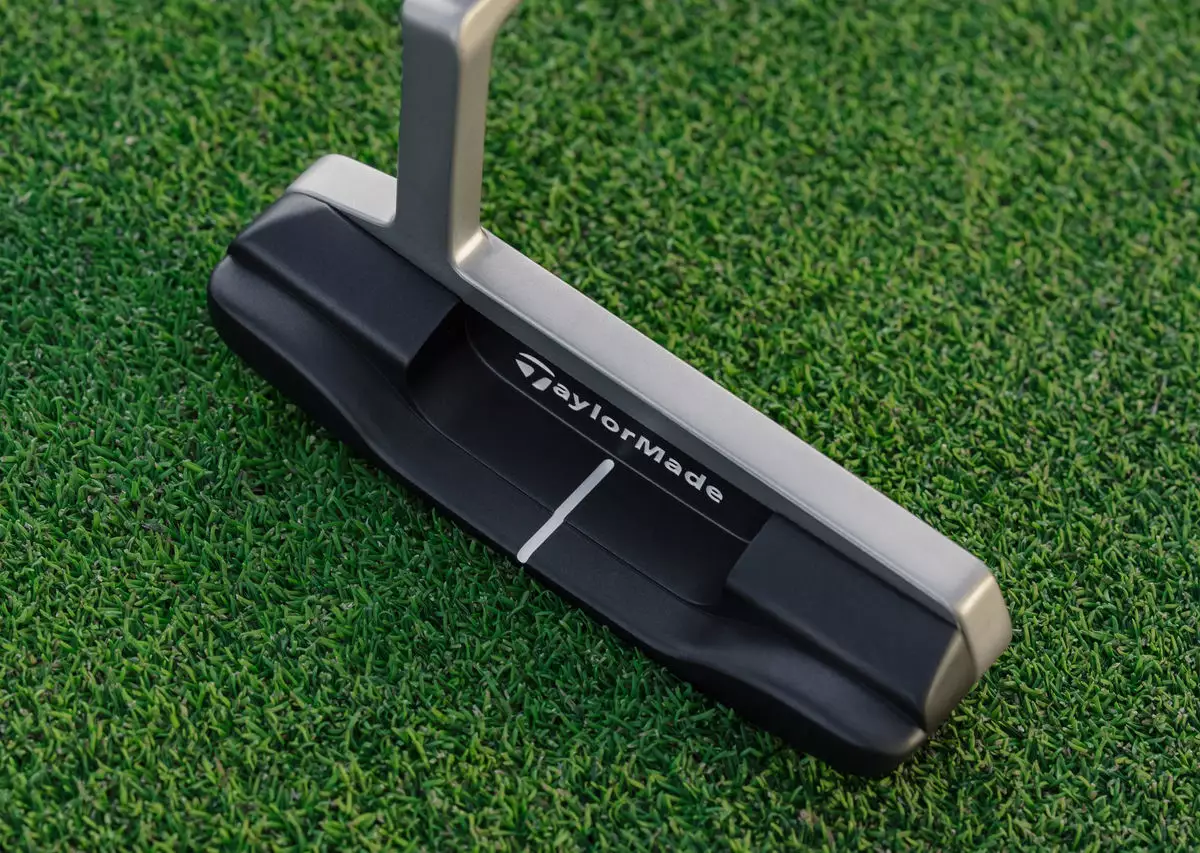
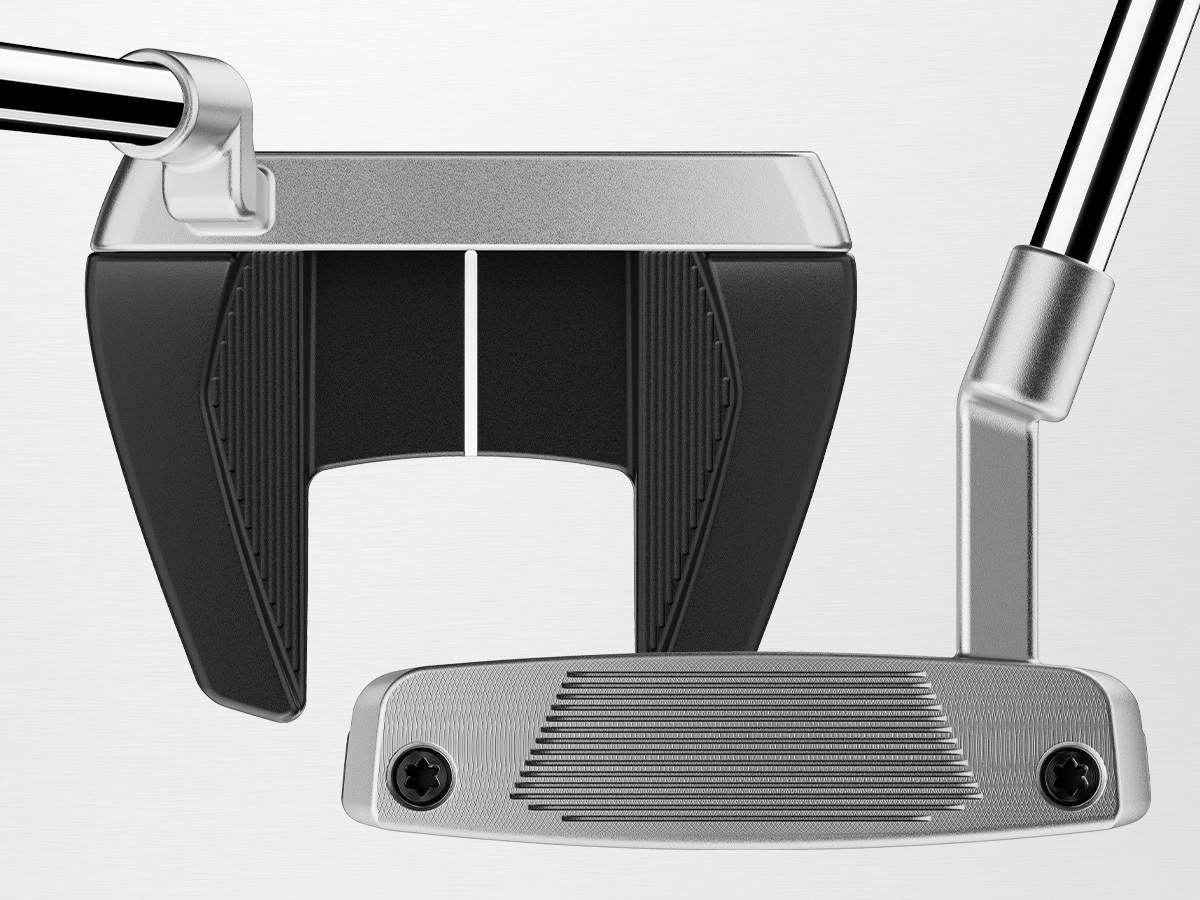
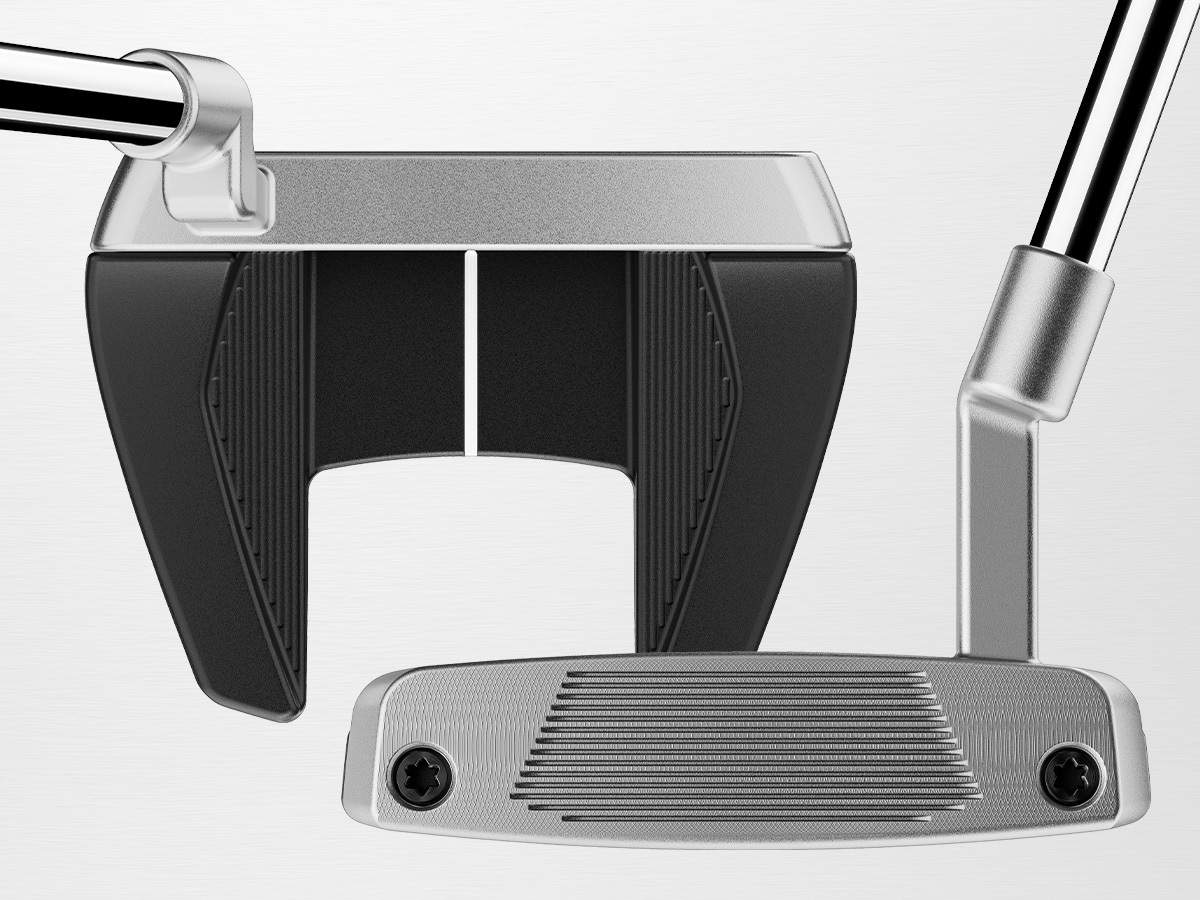
The SYSTM2 is built from 304 stainless steel — a softer alloy than the 17-4 stainless used in many standard putters, which means more tactile feedback at impact and more character in how the club tells you what happened at contact. Every head in the lineup features the same premium two-tone finish: a satin scratch silver front and a black PVD back. That contrast isn’t cosmetic. Standing over a putt, the defined edge between silver and black helps your eyes locate the face and square it to the target line without needing extra alignment aids or top markings.
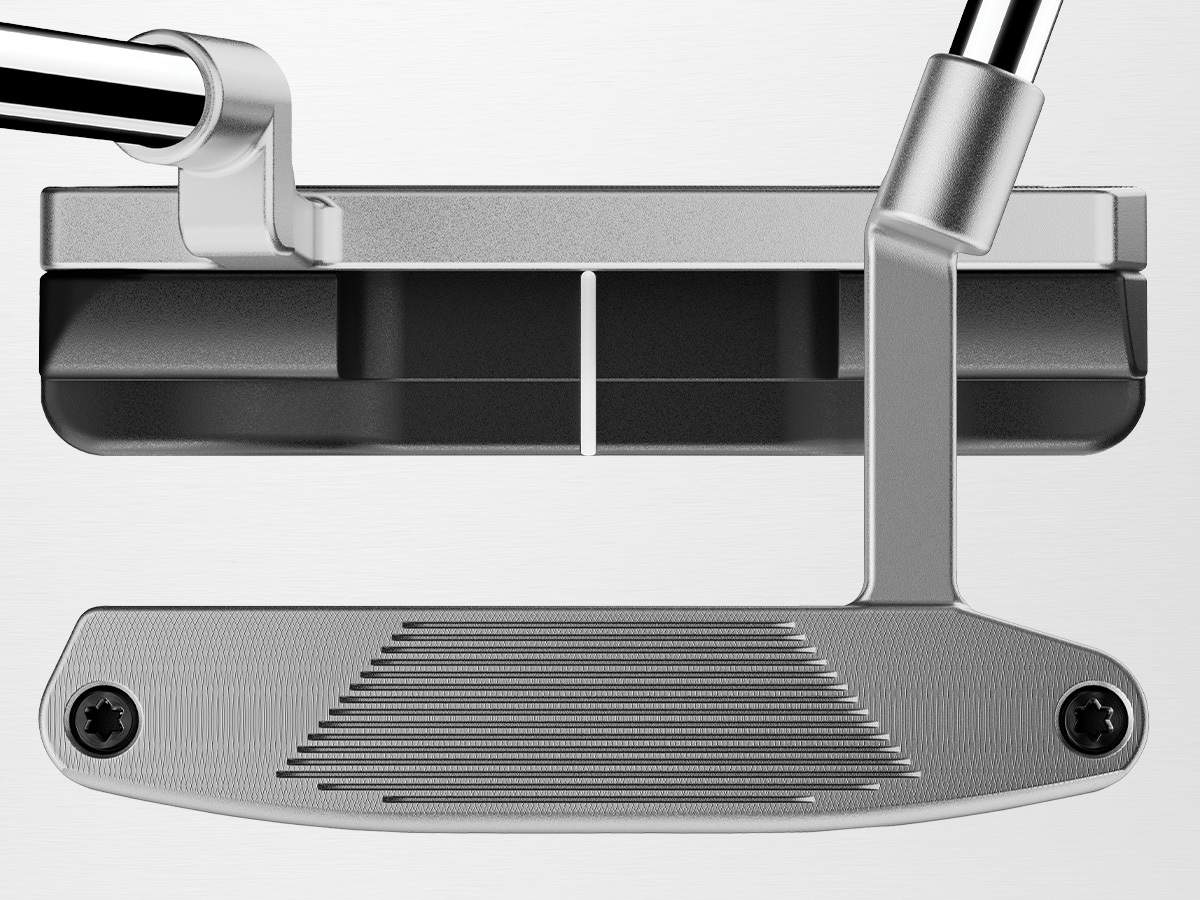
The physical construction has a detail worth noticing: every connection point on these heads is milled and then fastened by two screws visible on the face. TaylorMade chose not to hide that. It’s both a structural decision and a statement about how seriously they approached the manufacturing of this line.
The face treatment is the most technically significant element of the SYSTM2. The entire face is first fly-cut — a machining process that removes any surface irregularity and creates a perfectly flat, consistent base. Then a saw-cutter carves score lines at a specific depth optimized for feel and consistent roll. This sequence matters: the fly-cut baseline eliminates manufacturing variance before the score lines are applied, so every ball leaves the face with the same launch angle and the same initial roll characteristics, regardless of exactly where contact is made.
The SYSTM2 Bandon L-Neck: face-on studio view showing the two-tone satin silver and black PVD construction.
The Two-Tone Finish: What It Does and Why It Works
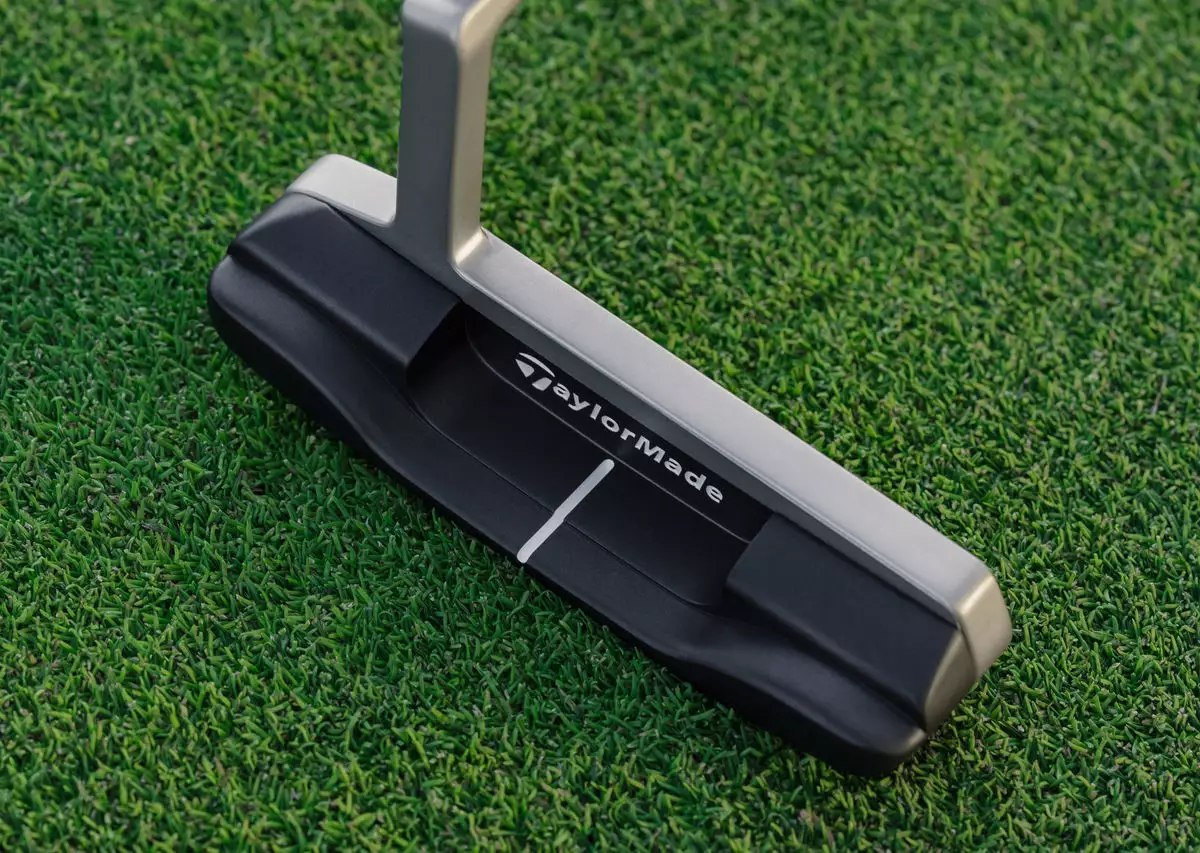
The satin scratch silver on the face and topline meets the black PVD on the back of the head at a visually sharp boundary. At address, this acts as a built-in alignment system: your eyes immediately read the front edge of the putter, which is exactly what you need to confirm the face is square before you pull the trigger on a putt. Golfers who struggle with alignment on longer putts often do so because the putter face blends visually with the head behind it. The SYSTM2 design removes that ambiguity cleanly.
The black PVD coating is also the durable choice. PVD — Physical Vapor Deposition — bonds to the steel at a molecular level, which means it doesn’t chip or peel the way paint does. The matte black finish will hold up through a full season of rounds and still look exactly the way it does out of the box.
Close-up of the SYSTM2 face milling and two-tone black PVD finish — the satin silver and black meet at a crisp edge.
The Five Models: Which One Is Built for Your Stroke
The SYSTM2 lineup divides into two families. The mallet family — the Bandon and Ardmore — is new to TaylorMade’s range and covers golfers who want the forgiveness and alignment support of a compact mid-mallet head. The blade family — the Soto, Juno, and Del Monte — gives golfers three different blade widths to choose from, each tuned for different levels of forgiveness and feedback. Here’s what each shape actually delivers.
Bandon — Mid-Mallet with 33° Toe Hang
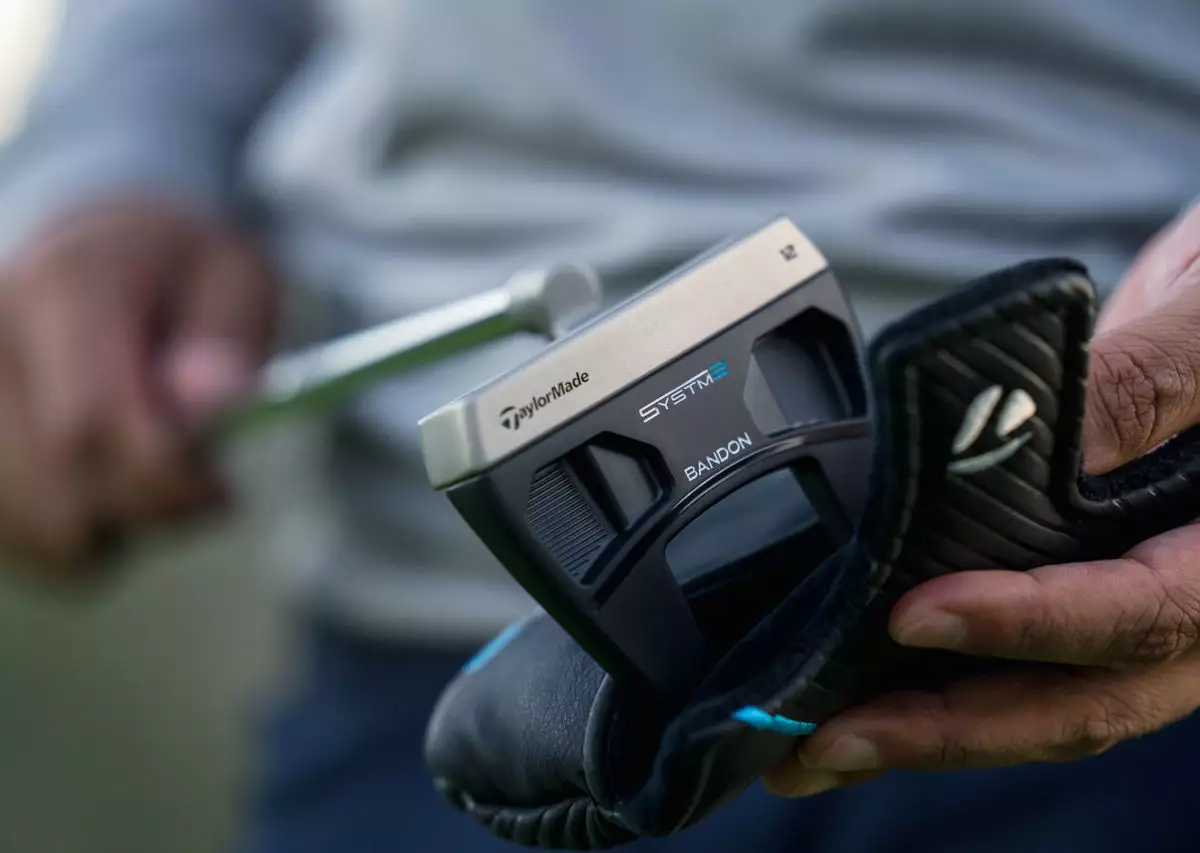
The Bandon is a traditional mid-mallet shape: compact enough to feel tidy at address, large enough to add stability over a standard blade. The L-Neck hosel creates 33° of toe hang, which means the face naturally opens slightly on the backswing and closes through impact — the right behavior for golfers with a mild arc in their stroke. Full-shaft offset brings the hands ahead of the ball at setup. The Bandon is also available in a Single Bend configuration, which delivers a face-balanced setup and half-shaft offset — the choice for golfers who stroke the ball straight back and straight through without significant face rotation.
Ardmore — Mid-Mallet with 31° Toe Hang
The Ardmore is the second new mid-mallet in the lineup. Its shape is subtly different from the Bandon — a slightly altered profile that some players will find easier to align confidently at address. The 31° toe hang from the L-Neck hosel sits slightly below the Bandon’s 33°, making it the right fit for golfers whose stroke arc is very mild, almost straight, but who still feel better over a head with some toe-hang behavior. Like the Bandon, the Ardmore also comes in a Single Bend (face-balanced) version for straight-stroke players.
The SYSTM2 Ardmore L-Neck — traditional mid-mallet with 31° toe hang and full-shaft offset.
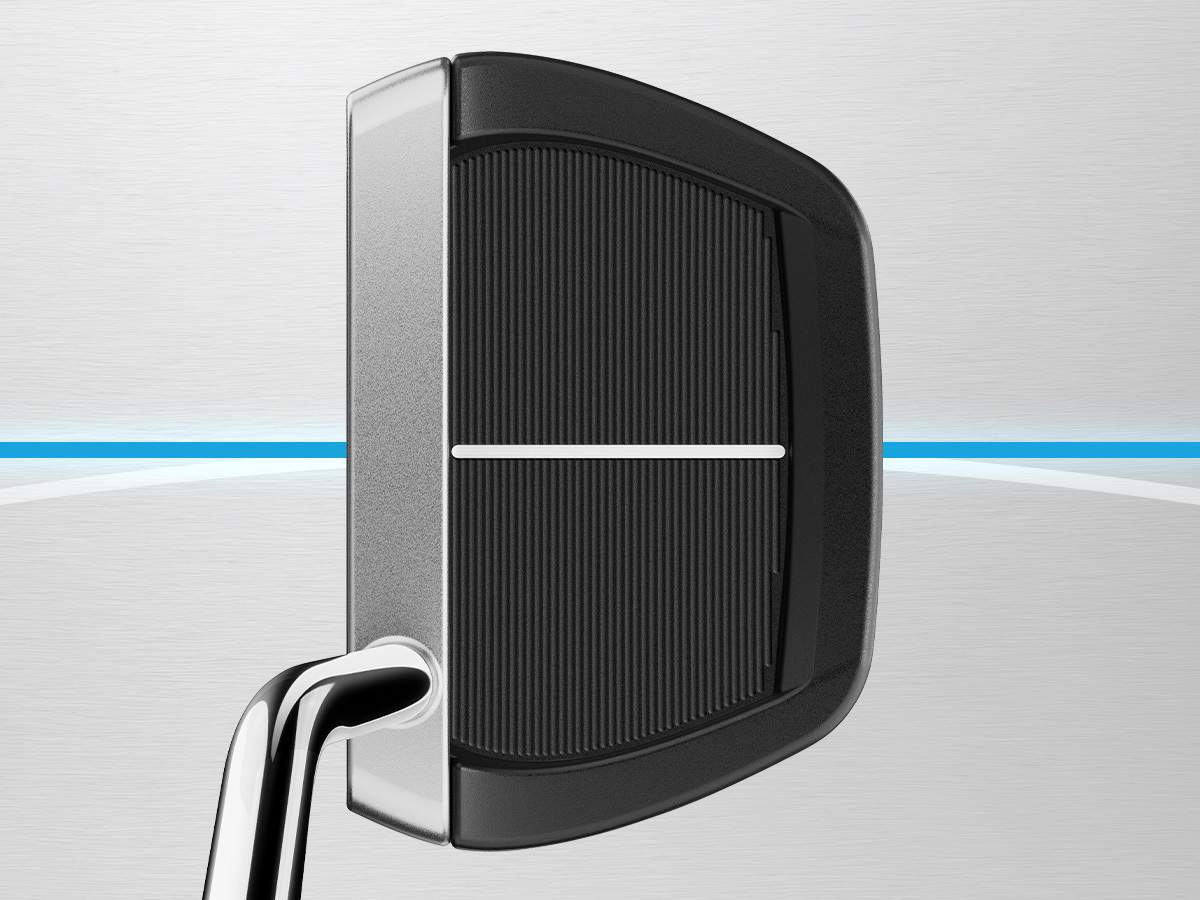
Soto — Classic Blade with Rounded Bumpers
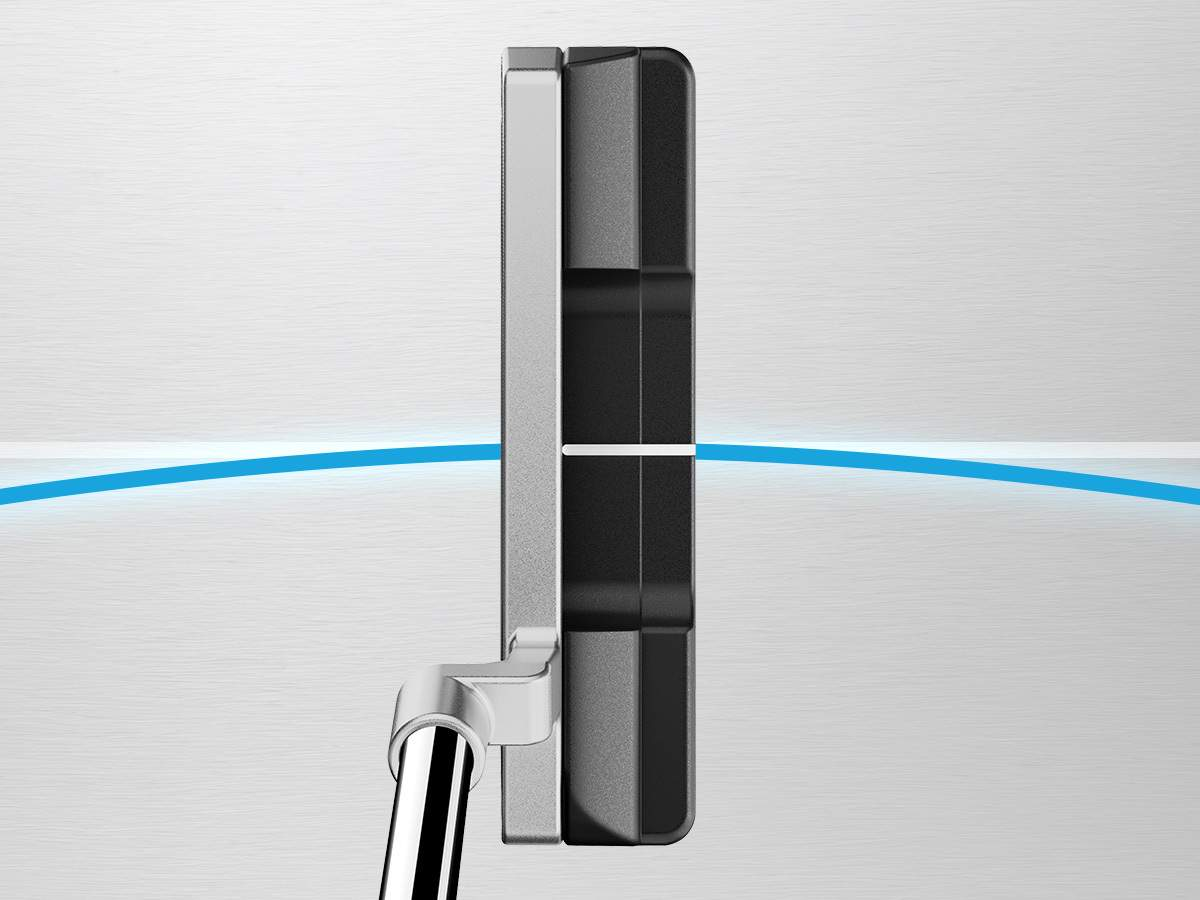
The Soto is a traditional blade with soft, flowing lines and rounded bumpers at the heel and toe. At address it looks like a classic putter — narrow, clean, nothing between you and the ball. The L-Neck version creates 43° of toe hang, making it the right shape for golfers with a moderate to strong arc who have spent their putting lives over a blade and want exactly that same feedback and feel in a new piece of equipment. The Soto is also available in a Short Curve (92) hosel that pushes toe hang up to 55° — the configuration for players with a very pronounced arc who use active forearm rotation through the stroke.
The SYSTM2 Soto L-Neck — classic blade proportions with soft bumpers and 43° of toe hang.
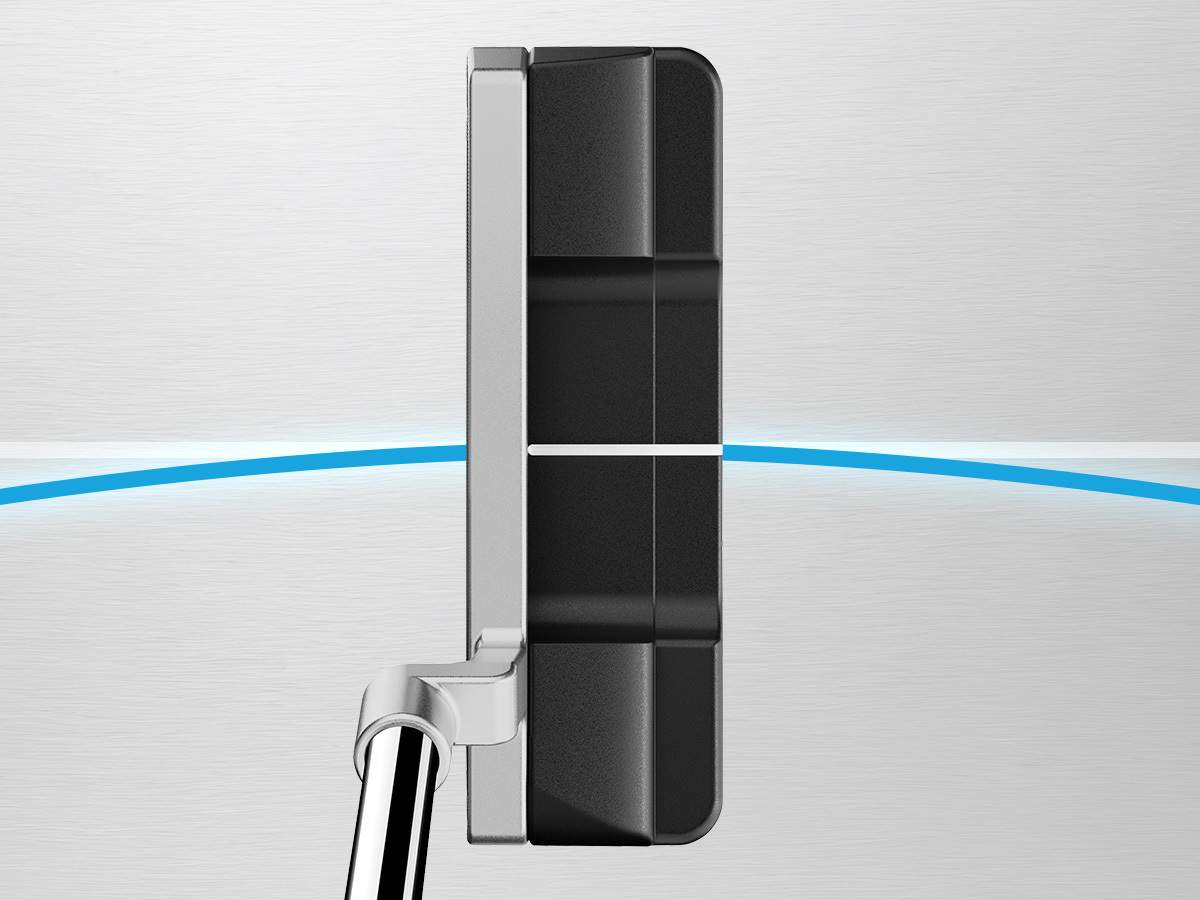
Juno — Blade with Squared Bumpers
The Juno shares the Soto’s hosel options and specifications exactly — 43° on the L-Neck, 55° on the Short Curve — but delivers a blade shape with more angular, squared-off bumpers at the heel and toe. This produces a crisper, more graphic silhouette at address. The practical difference between the Soto and Juno is almost entirely a visual preference: golfers who find rounded shapes easier to align tend to gravitate toward the Soto; golfers who prefer a sharper, more defined look behind the ball tend to prefer the Juno. Both are the same club in terms of performance.
Del Monte — Wide-Body Blade for More Forgiveness
The Del Monte is the widest blade in the lineup. Its extended back pushes the center of gravity deeper and lower into the head, which raises MOI and increases stability on off-center strikes compared to a standard-width blade. In practical terms, a slightly mis-hit putt on the Del Monte holds its line and speed better than on a narrower blade — it’s the most forgiving of the three blade options without stepping up to a mallet shape. The L-Neck version creates 40° of toe hang; the Short Curve version delivers 51°. If you like the look of a blade at address but want a margin of error closer to a mallet, the Del Monte is where you start.
Understanding Hosel and Toe Hang — The Decision That Matters Most
Head shape is what you see at address. Hosel configuration is what determines whether the putter works with your stroke or fights against it. Getting the hosel right is the more important of the two decisions, and the SYSTM2 lineup makes it easier than most putter ranges to match them up correctly.
Toe hang is measured by balancing the shaft horizontally on a finger. A putter with high toe hang will drop open at the face end — it naturally wants to open and close through the arc of the stroke. A face-balanced putter keeps the face pointing skyward regardless of how the head is balanced — it’s designed for a stroke that keeps the face square throughout with no rotation. In between those extremes is the L-Neck and its various degrees of toe hang — the configuration for golfers whose stroke arcs slightly but doesn’t involve strong face rotation.
A quick guide to choosing your SYSTM2 hosel: if your stroke is straight back and straight through, start with a Bandon 72 or Ardmore 72 (Single Bend, face-balanced). If your stroke has a mild arc, the Bandon 12 or Ardmore 12 at 31–33° toe hang covers you. Moderate arc with a blade preference: Soto 12 or Juno 12 at 43°. Strong arc with active face rotation: Soto 92, Juno 92, or Del Monte 92 at 51–55°.
Feel and Performance on the Green
304 stainless steel gives the SYSTM2 a distinctive feel that sits above what most golfers expect from a putter at this level. It’s a softer alloy than the higher-grade stainless used in most manufactured putters, which means more sensory information reaches your hands at impact. Well-struck putts feel dense and connected — that specific sensation where the ball seems to stay on the face for just a fraction of a second longer. Mishits feel slightly different, which is exactly what you want: the feedback loop that helps you self-correct over time without being punished on distance.
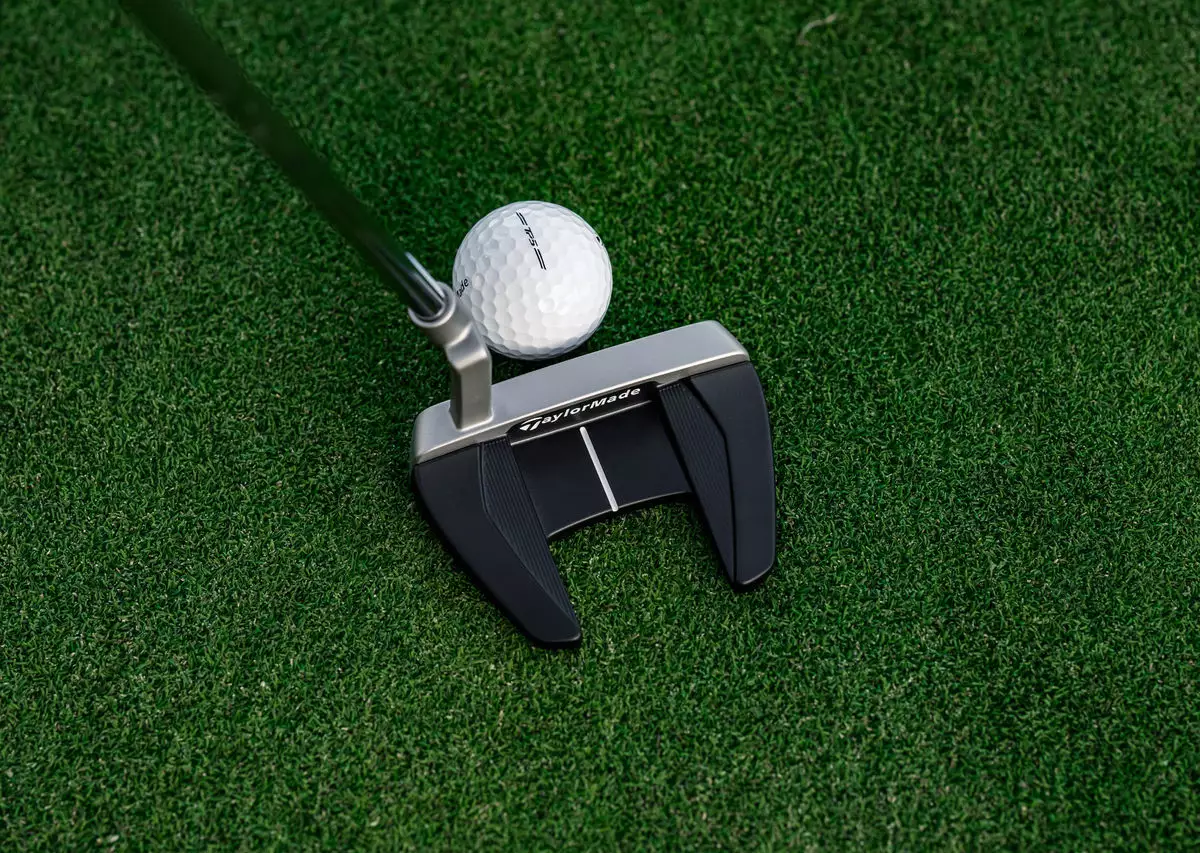
The fly-cut, saw-scored face directly affects the quality of roll in the first 12 to 18 inches after impact — the phase of a putt’s journey where most distance-control errors are actually introduced. Standard-milled or smooth faces tend to allow the ball to skid slightly before transitioning to true roll, which creates inconsistent distance control, especially on longer putts. The SYSTM2’s scored face is engineered to minimize that skid phase and promote earlier, truer end-over-end roll. Putts hold their line better from the start, and your distance control on 20-plus-foot putts becomes more repeatable.
The SYSTM2 Bandon at address on the putting green — the scored face promoting true roll from first contact.
HEADING 2: Full SYSTM2 Specifications
| Model | Hosel | Toe Hang | Offset | Hand | Length | Loft | Lie |
|---|---|---|---|---|---|---|---|
| Soto 12 | L-Neck | 43° | Full-Shaft | RH / LH | 34″, 35″ | 3.5° | 70° |
| Soto 92 | Short Curve | 55° | 3/4 Shaft | RH | 34″, 35″ | 3.5° | 70° |
| Juno 12 | L-Neck | 43° | Full-Shaft | RH / LH | 34″, 35″ | 3.5° | 70° |
| Juno 92 | Short Curve | 55° | 3/4 Shaft | RH | 34″, 35″ | 3.5° | 70° |
| Del Monte 12 | L-Neck | 40° | Full-Shaft | RH / LH | 34″, 35″ | 3.5° | 70° |
| Del Monte 92 | Short Curve | 51° | 3/4 Shaft | RH | 34″, 35″ | 3.5° | 70° |
| Bandon 12 | L-Neck | 33° | Full-Shaft | RH / LH | 34″, 35″ | 3° | 70° |
| Bandon 72 | Single Bend | Face-Balanced | Half-Shaft | RH / LH | 34″, 35″ | 3° | 70° |
| Ardmore 12 | L-Neck | 31° | Full-Shaft | RH / LH | 34″, 35″ | 3° | 70° |
| Ardmore 72 | Single Bend | Face-Balanced | Half-Shaft | RH / LH | 34″, 35″ | 3° | 70° |
Stock shaft: KBS Stepped Chrome (120g). Stock grip: Lamkin Deep Etched Black/Blue (81g, 0.580 core).
SYSTM2 Bandon hosel and offset detail — showing how the L-Neck and single-bend hosels affect face alignment at address.
Who Should Play the TaylorMade SYSTM2
The SYSTM2 lineup is built for golfers who take their putting seriously and understand — or want to understand — the relationship between their stroke and their equipment. It’s not a putter you grab off the wall because it looks good. It’s a putter you select after thinking about your stroke type, your preferred head shape, and how much feedback you want at impact.
Golfers who have always played blades and are satisfied with the feedback they give will be right at home in the Soto or Juno. The face feel is excellent, the look at address is exactly what they expect, and the toe-hang options cover every level of stroke arc a blade player is likely to have. Golfers who have been playing blades but find they lose too many strokes on off-center hits should try the Del Monte before stepping up to a mallet — its wider body adds meaningful forgiveness without changing the fundamental blade aesthetic they’re comfortable with.
Golfers who want the stability and alignment help of a mallet but have been playing blades and feel uncomfortable over a large head will find the Bandon and Ardmore shapes ideal. Both are compact enough to feel right for a blade player making the move to a mallet, while the alignment contrast of the two-tone finish gives them the visual anchor they gain from a larger head without the full footprint. Single-handicap golfers and mid-handicap golfers alike will find the right fit somewhere in this lineup — the only real variable is taking the time to match the hosel to the stroke.
How the SYSTM2 Fits TaylorMade’s Putter Range
TaylorMade’s putter family spans from the Spider Tour — a high-MOI, large-format mallet with an aggressive alignment system used on tour — down to the TP milled series, which prioritizes raw feel and feedback above everything else. The SYSTM2 occupies an intentional position between those two ends: more head-shape variety than the Spider Tour family, more softness and tactile feedback than a typical entry-level putter, and a materials standard — 304 stainless, fly-cut face, saw-scored score lines — that punches above its category.
If the Spider Tour has felt too visually large at address for your taste, the SYSTM2 mallets give you the stability and alignment benefits of a mallet in a much more compact package. If you’ve been playing a basic blade and feel like you’re not getting much information back from your putter, the 304 steel construction of the SYSTM2 blades will be an immediate upgrade in feel quality. The lineup is genuinely versatile — it covers a wider range of stroke types and player preferences than any single-model putter can.
Getting Fit for the Right SYSTM2 at Fairway Golf
Putter fitting is the most underutilized fitting service in golf, and the SYSTM2 is a lineup that genuinely rewards getting it right. Length, loft, lie, and hosel configuration all interact with your stroke mechanics in specific ways. A putter that’s a half-inch too long will push your elbows out and change your arc. A putter with the wrong amount of toe hang for your stroke will cause the face to fight you through impact rather than work with you. The difference between the right fit and the wrong one can be three or four putts per round.
At Fairway Golf in San Diego, we fit putters the same way we fit irons — with data and the club in your hands on a real putting surface. We work through stroke arc, natural address position, and visual preference to find the head shape and hosel configuration that matches what you actually do. Both 34″ and 35″ lengths are available across the lineup, and left-hand configurations are stocked on all L-Neck models and both Single Bend mallets. Contact our team to schedule a fitting or come visit us at the San Diego shop.
The TaylorMade SYSTM2 is a precision-built, soft-steel putter collection that earns its place in a serious golfer’s bag. Five head shapes, ten configurations, one construction philosophy — 304 stainless steel, fly-cut face, saw-scored milling, and a two-tone finish that does real work at address. Whether you’ve been playing the wrong putter for years or you’re looking to upgrade from a basic setup to something built with real engineering behind it, the SYSTM2 lineup has a model that fits your stroke.
Fairway Golf carries the full SYSTM2 range. Shop each model below:
TaylorMade SYSTM2 Bandon Putters
TaylorMade SYSTM2 Ardmore Putters
TaylorMade SYSTM2 Soto Putters
TaylorMade SYSTM2 Juno Putters TaylorMade SYSTM2 Del Monte Putters
 Fairway Golf Blog